Label literacy
How to Read a Proprietary Blend: Label Math Using Nerve Savior's 600 mg Blend
A proprietary blend shows one total weight and lists ingredients from most to least by weight, as FDA rules require (FDA, Small Entity Labeling Guide). So ingredient number k can weigh at most the total divided by k. In Nerve Savior's 600 mg blend, salt is first, ginkgo (8th) is at most 75 mg, and vitamin B6 (7th) is at most about 86 mg. These are ceilings, not amounts.
Written by the Nerve Savior editorial teamUpdated · 8 min read
The basics
What does a proprietary blend mean on a supplement label?
A proprietary blend is a group of ingredients sold under one name with one total weight. The label names every ingredient but does not say how much of each is inside.
Makers say blends protect their recipe from copycats. For buyers, the result is a guessing game. You know what is in the capsule, but not the dose of any single part.
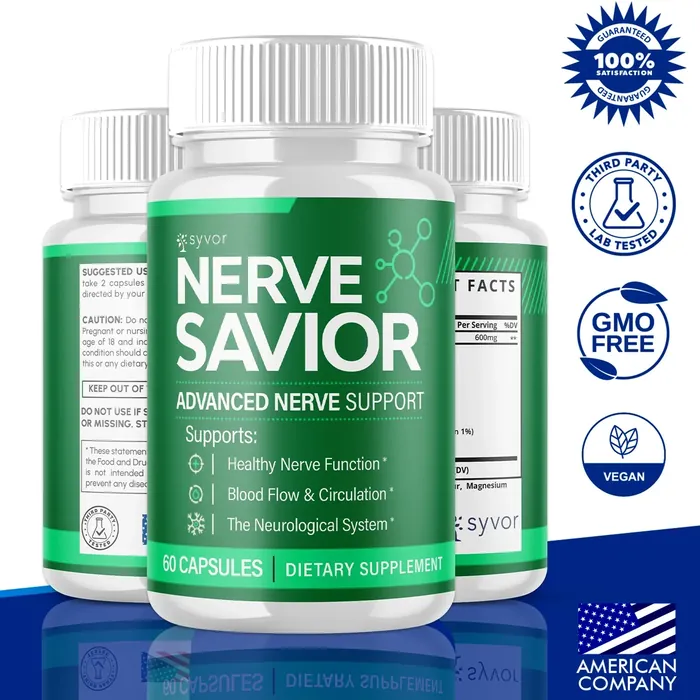
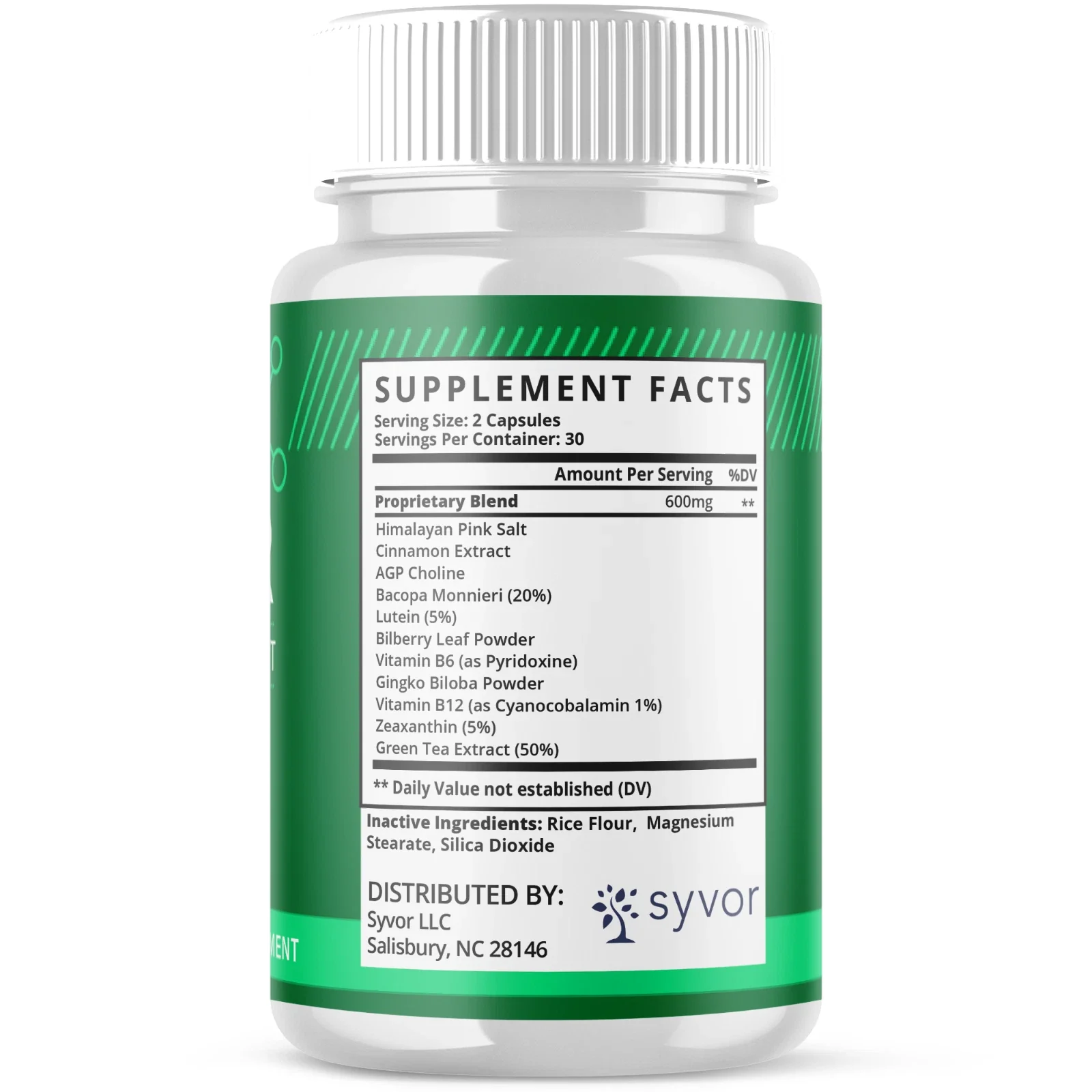
Nerve Savior is a clear example. Its label shows a "Proprietary Blend" of 600 mg per serving of 2 capsules. Eleven ingredients share that 600 mg, and none has its own number.
The rules
What do FDA rules require for a proprietary blend?
FDA requires two things: the total weight of the blend, and the ingredients listed in order of predominance by weight. FDA's small-business labeling guide says "just the total amount of the blend need be stated" (FDA, Small Entity Labeling Guide).
FDA's main labeling guide adds a second rule. It says dietary ingredients that have Daily Values "must be listed separately and the individual weights declared" (FDA, Labeling Guide Ch. IV). We come back to that rule below, because it matters for B6 and B12.
| Blend name | Required ("Proprietary Blend" or a similar term) |
|---|---|
| Total blend weight | Required, on the same line as the name |
| Ingredient order | Required, from most to least by weight |
| Weight of each blend ingredient | Not required |
| Nutrients with Daily Values | Listed separately with their weights |
The method
How do you work out the most each blend ingredient can weigh?
Divide the blend total by the ingredient's position on the list. The answer is the highest weight it could possibly have.
The logic is simple. If the 8th ingredient weighed more than 600 / 8, the seven above it would each have to weigh even more. Eight items all over 75 mg would add up to more than 600 mg, which is impossible.
Find the total
Read the blend weight. For Nerve Savior it is 600 mg per 2 capsules.
Count the position
Number the ingredients in label order. Ginkgo is 8th.
Divide
600 / 8 = 75. Ginkgo weighs at most 75 mg.
Find the floor for item 1
The first ingredient must weigh at least the total divided by the count: 600 / 11 = 54.5 mg for the salt.
The real amounts are almost always lower than these ceilings, because big ingredients at the top use up most of the weight.
Worked example
What are the label-math ceilings for all 11 Nerve Savior ingredients?
Salt can weigh up to the full 600 mg, and green tea extract, last of 11, at most 54.5 mg. The table runs every line.
| Position | Label name | Math | At most |
|---|---|---|---|
| 1 | Himalayan Pink Salt | 600 / 1 | 600 mg (and at least 54.5 mg) |
| 2 | Cinnamon Extract | 600 / 2 | 300 mg |
| 3 | AGP Choline | 600 / 3 | 200 mg |
| 4 | Bacopa Monnieri (20%) | 600 / 4 | 150 mg |
| 5 | Lutein (5%) | 600 / 5 | 120 mg of material |
| 6 | Bilberry Leaf Powder | 600 / 6 | 100 mg |
| 7 | Vitamin B6 (as Pyridoxine) | 600 / 7 | about 86 mg |
| 8 | Gingko Biloba Powder | 600 / 8 | 75 mg |
| 9 | Vitamin B12 (as Cyanocobalamin 1%) | 600 / 9 | 66.7 mg of material |
| 10 | Zeaxanthin (5%) | 600 / 10 | 60 mg of material |
| 11 | Green Tea Extract (50%) | 600 / 11 | 54.5 mg |
The label spells ginkgo as "Gingko." AGP choline is alpha-GPC, a choline source.
Percentages
What do percentages like lutein 5% and B12 1% mean?
A percentage after an ingredient usually tells you how much of that raw material is the named compound. Lutein (5%) means the powder is about 5% lutein, so most of its weight is carrier.
Run the math on each one:
- Lutein: at most 120 mg of material x 5% = about 6 mg of lutein. The AREDS2 eye study used 10 mg (NEI, AREDS/AREDS2).
- Vitamin B12: at most 66.7 mg of material x 1% = about 0.667 mg, or 667 mcg. The Daily Value is 2.4 mcg (FDA, Daily Values), and the NIH sets no upper limit (ODS, Vitamin B12).
- Zeaxanthin: at most 60 mg x 5% = about 3 mg. AREDS2 used 2 mg.
- Bacopa (20%): this marks the extract strength. StatPearls says studied extracts are usually standardized to 24-55% bacosides (StatPearls, Bacopa).
- Green tea extract (50%): the label does not say 50% of what.
Remember that each result is a ceiling. The real lutein dose could be far below 6 mg.
Vitamins
Why should vitamins with Daily Values be listed separately?
Vitamins with Daily Values get their own line so you can see the dose and the percent of the Daily Value. Vitamin B6 has a Daily Value of 1.7 mg and B12 of 2.4 mcg (FDA, Daily Values).
FDA's guide says such ingredients "must be listed separately and the individual weights declared" (FDA, Labeling Guide Ch. IV). On the Nerve Savior label, B6 and B12 appear only inside the blend, with no amounts. We note this as an observation about the label, not a legal finding.
B6 has a U.S. upper limit of 100 mg a day, and high doses over time can cause nerve damage (ODS, Vitamin B6). Its ceiling in this blend is about 86 mg. If you take a multivitamin or B-complex too, show both labels to your doctor or pharmacist.
Key point
Are label-math ceilings the real amounts?
No. A ceiling is the most an ingredient could weigh if everything above it weighed the same. Real amounts are almost always lower. Say "at most" every time you quote one.
Summary
What can and can't you learn from a proprietary blend label?
You can learn what is inside, the order of weight, and an upper limit for each ingredient. You cannot learn the actual dose of anything.
You can learn
- Every ingredient's name and form
- Which ingredient is the largest (for Nerve Savior, salt)
- A ceiling for each ingredient by 600 / k
- A floor for the first ingredient
- Whether a ceiling sits below the dose used in research
You cannot learn
- The real dose of any single ingredient
- Your total B6 intake with confidence
- Whether the capsules match the label without lab testing (NCCIH, Using Supplements Wisely)
- Whether the mix works; no trial of Nerve Savior is published
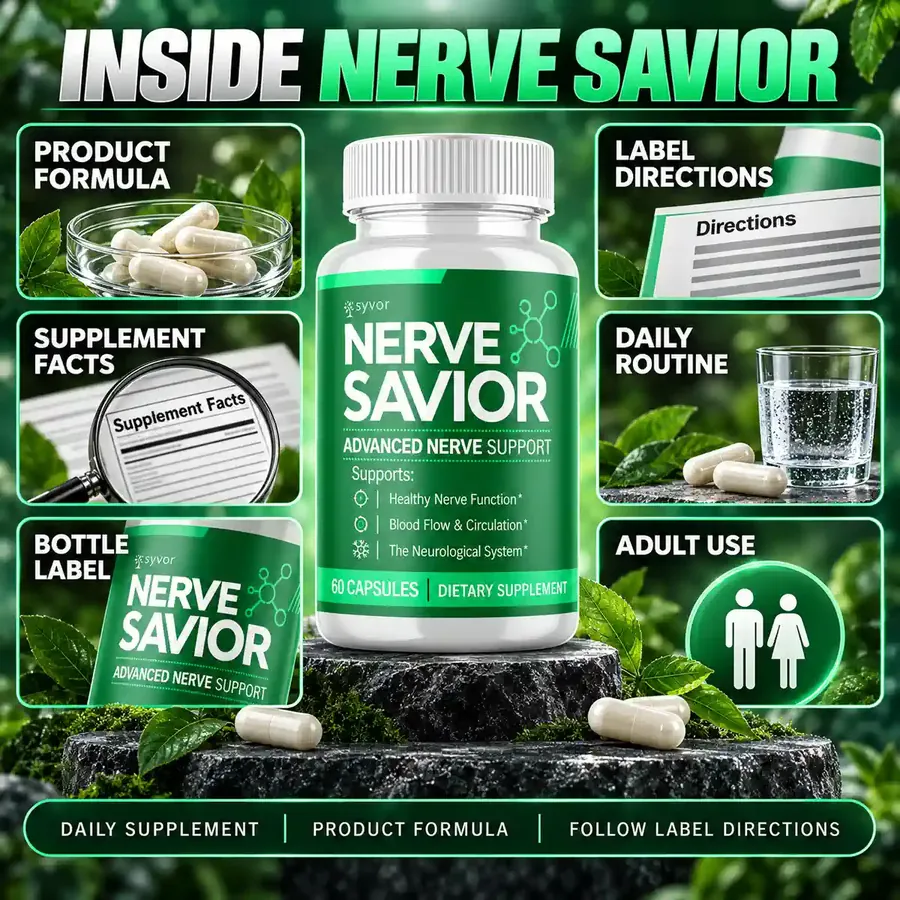
For the full label walk-through, see the Supplement Facts page. To learn why salt sits at the top, read why salt is listed first.
FAQ
Proprietary blend questions
What does proprietary blend mean on a supplement?
A proprietary blend is a mix of ingredients sold under one name with only the total weight shown. The label must list the ingredients from most to least by weight, but it does not have to give the amount of each. Nerve Savior's blend is 600 mg per 2 capsules.
How do you calculate ingredient amounts in a proprietary blend?
You can only calculate an upper limit: divide the blend total by the ingredient's position on the list. In a 600 mg blend, the 4th ingredient is at most 150 mg and the 8th at most 75 mg. The real amounts are usually lower, so call them ceilings.
Is a proprietary blend legal?
Yes, proprietary blends are legal under FDA labeling rules if the label shows the total weight and lists ingredients by weight order. FDA guidance also says nutrients with Daily Values, such as vitamins B6 and B12, must be listed separately with their weights.
What does 5% mean after lutein on a label?
The 5% after lutein usually means the raw material is about 5% lutein by weight. In Nerve Savior, lutein material is at most 120 mg, so the lutein itself is at most about 6 mg. The AREDS2 eye study used 10 mg of lutein a day.
How much vitamin B12 is in Nerve Savior?
Nerve Savior does not print its vitamin B12 amount. By label math, the 1% cyanocobalamin material is at most 66.7 mg, which works out to at most about 667 mcg of B12. The Daily Value is 2.4 mcg, and no upper limit has been set for B12.
Why is salt the first ingredient in Nerve Savior?
Salt is first because it weighs the most of the 11 blend ingredients, and FDA rules list blend items from heaviest to lightest. That means the salt weighs between about 54.5 mg and 600 mg per serving. The label gives no reason for including it.
Who wrote this
Written and reviewed by
Plain-language pages built from the bottle label, the order page and linked public health sources such as NIH, FDA and CDC.
Last updated . Read our editorial standards and the way we check reviews. This website is run by a U.S. retailer for Nerve Savior, not by the manufacturer. We get paid when you buy through our order links.
Keep reading
More about Nerve Savior
Supplement Facts
The Nerve Savior label, line by line: the 600 mg blend, the most each ingredient can weigh, and what is missing.
Read more
Salt in supplements
Salt tops the Nerve Savior blend. Here is the sodium math, the federal limits and who should count it.
Read moreIngredients
All 11 ingredients in label order, with the most each can weigh and how that compares with research.
Read moreUSA Authorized Nerve Savior Retailer
Ready to try Nerve Savior?
Pick how long you want to try it. Two capsules a day, and one bottle lasts 30 days.
- Secure checkout
- 30-day return window
- Ships from the U.S. with tracking