Benefits
Nerve Savior Benefits: The Three Label Claims Explained
The Nerve Savior label says it supports healthy nerve function, blood flow and circulation, and the neurological system.
Vitamins B6 and B12 and AGP choline sit behind the nerve claim, ginkgo behind blood flow, and bacopa behind the neurological claim.
Learn more in how Nerve Savior works.
Written by the Nerve Savior editorial teamUpdated
On the bottle
What benefits does Nerve Savior claim?
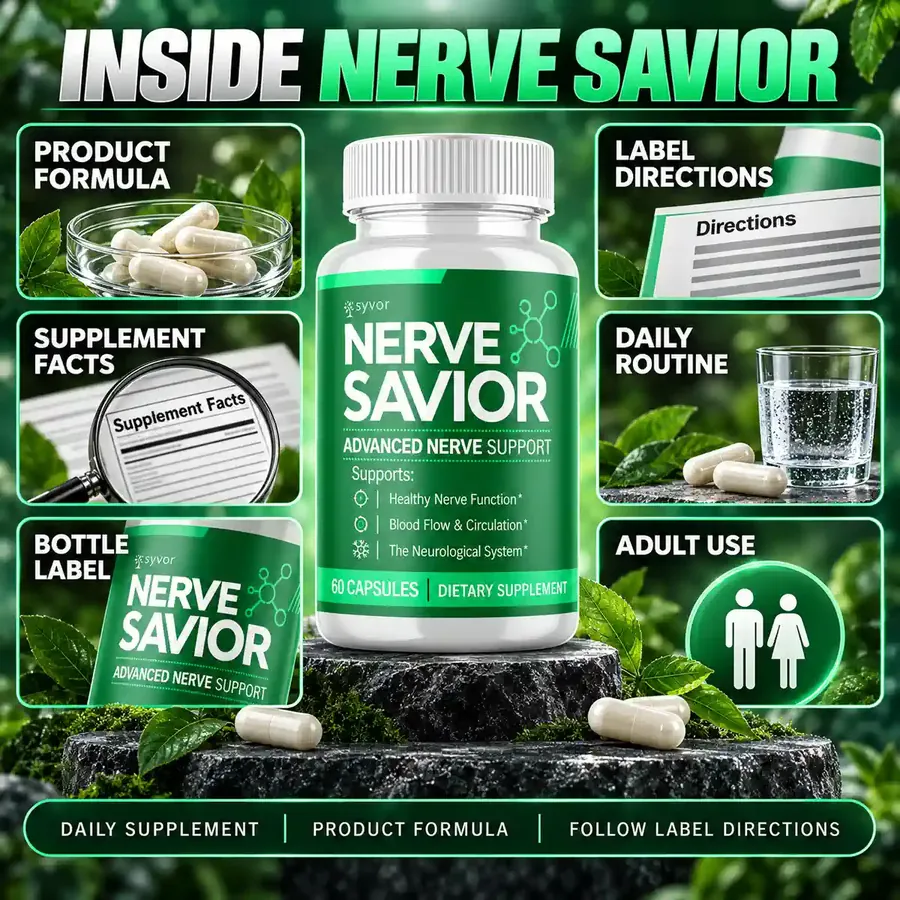
The front label makes three claims. It says Nerve Savior supports healthy nerve function, blood flow and circulation, and the neurological system. Each one carries an asterisk that points to the FDA statement.
Healthy nerve function
Tied mostly to vitamins B6 and B12 and to AGP choline (alpha-GPC), a choline source.
Blood flow and circulation
Tied mostly to ginkgo, the herb sold for circulation, with cinnamon and green tea extract nearby.
The neurological system
Tied mostly to bacopa and choline, both studied for memory and brain chemistry.
These are structure/function claims. The FDA lets supplements make them without approval, as long as the label carries the disclaimer: "*These statements have not been evaluated by the Food and Drug Administration. This product is not intended to diagnose, treat, cure or prevent any disease." (FDA, Structure/Function Claims). The asterisk means nobody outside the company checked the claim.
Claim 1
Does Nerve Savior support healthy nerve function?
It contains two vitamins your nerves need, but the label hides how much. Vitamin B6 and vitamin B12 both have clear jobs in the nervous system.
Vitamin B6: needed, but more is not better
MedlinePlus says B6 helps maintain normal nerve function (MedlinePlus, Vitamin B6). Adults need only 1.3 to 1.7 mg a day (ODS, Vitamin B6). Most people get that from food. Too much over time can harm nerves, and NINDS lists excess B6 as a known vitamin-related cause of neuropathy (NINDS, Peripheral Neuropathy). Nerve Savior's B6 could be as high as about 86 mg. Read more on the vitamin B6 page.
Vitamin B12: helps if you are low
The NIH says a B12 shortage can cause numbness and tingling, even without anemia (ODS, Vitamin B12). If your level is low, B12 matters. If it is normal, extra B12 has no shown nerve benefit. A blood test tells you which group you are in. The vitamin B12 page covers the details.
Choline: a nutrient, in a small share
AGP choline is a choline source. Adults need 425 to 550 mg of choline a day (ODS, Choline). Third in line, it can weigh at most 200 mg, and only part of that is choline itself.
Claim 2
Does Nerve Savior help blood flow and circulation?
The evidence is thin. The circulation claim rests mainly on ginkgo, and ginkgo trials have been disappointing.
LiverTox, an NIH resource, says trials of ginkgo for claudication, the leg pain of poor circulation, showed no effect or only a modest one (LiverTox, Ginkgo). Those trials used 120 to 240 mg of extract a day. Nerve Savior lists "Gingko Biloba Powder" eighth, so it weighs at most 75 mg. Powder is not the same as a concentrated extract.
Cinnamon extract sits second. NCCIH says it is unclear whether cinnamon helps diabetes (NCCIH, Cinnamon). Green tea extract sits last, at most 54.5 mg, and has not been studied for nerves.
So the claim says "supports." It does not say "improves," and no study of the product backs either word.
Claim 3
What does Nerve Savior offer the neurological system?
Mostly bacopa and choline, and the research on both is mixed. Neither has been tested in Nerve Savior.
LiverTox says bacopa has not been shown to work for any disease, and memory results are mixed (LiverTox, Bacopa). Typical doses are 300 to 600 mg of extract a day. Nerve Savior's bacopa can weigh at most 150 mg. The bacopa page compares the numbers.
Ginkgo has the largest study. In the GEM trial, more than 3,000 adults aged 75 and up took ginkgo or a dummy pill for about six years. Ginkgo did not prevent or slow dementia (NCCIH, Ginkgo).
The eye ingredients
Lutein, zeaxanthin and bilberry leaf are eye ingredients, not nerve ingredients. The AREDS2 study tested 10 mg lutein and 2 mg zeaxanthin in people with intermediate or advanced macular degeneration (NEI, AREDS/AREDS2). NCCIH says bilberry has not clearly helped any condition (NCCIH, Bilberry).
Side by side
Nerve Savior claims vs. evidence: how do they line up?
Each claim has a plausible ingredient behind it and a gap between the label and the research. The table puts them next to each other.
| Label claim | Main ingredients | What the evidence says | The gap |
|---|---|---|---|
| Healthy nerve function | B6, B12, AGP choline | B6 and B12 are needed for nerves; B12 helps people who are low | No printed amounts; B6 could be high |
| Blood flow and circulation | Ginkgo, cinnamon, green tea | Ginkgo: no or modest effect for claudication; cinnamon unclear | Ginkgo at most 75 mg vs. 120-240 mg studied |
| The neurological system | Bacopa, choline, ginkgo | Bacopa memory results mixed; ginkgo did not slow dementia | Bacopa at most 150 mg vs. 300-600 mg studied |
| Not claimed, but included | Lutein, zeaxanthin, bilberry leaf | Eye research (AREDS2), not nerve research | About 6 mg lutein at most vs. 10 mg in AREDS2 |
| Not claimed, largest share | Himalayan pink salt | No nerve research | Adds sodium |
Amounts
Are Nerve Savior's ingredient amounts close to research doses?
Mostly not. Even at their highest possible weights, bacopa, ginkgo, lutein and choline fall short of the amounts used in studies or set as daily guidelines.
B6 runs the other way. Its ceiling sits close to the U.S. upper limit, which is why counting it matters.
Fair view
What are the pros and cons of Nerve Savior?
Pros
- All 11 ingredients printed, in weight order
- Familiar ingredients with public safety data
- Includes B12, useful for people who test low
- Simple routine: 2 capsules once a day
- $19.95 a bottle, about $0.67 a day, with free U.S. shipping on the listing
- 30-day return window, seller pays return shipping
Cons
- No amount printed for any ingredient
- Salt is the largest single ingredient
- B6 and B12 not declared, though both have Daily Values
- Bacopa, ginkgo and lutein ceilings below research doses
- Ginkgo and green tea extract carry drug cautions
- No published trial of the product
Limits
What does Nerve Savior not do?
It does not treat neuropathy, diabetes or any disease. It is a dietary supplement, and its own label says it is not intended to diagnose, treat, cure or prevent any disease.
- It is not a pain medicine and has no tested effect on nerve pain.
- It does not replace blood-sugar control, which is what slows diabetic nerve damage (MedlinePlus, Diabetes & Nerve Damage).
- It does not replace a B12 test or B12 treatment from a doctor.
- It does not replace daily foot checks if you have diabetes.
The FTC says health claims need solid science, usually human trials (FTC, Health Products Guidance). Nerve Savior has none of its own. A fair test is your own careful month, covered on the results timeline page.
New numbness, tingling, burning, weakness or foot sores can signal diabetes, low B12 or another cause. Get them checked before you try any supplement.
FAQ
Nerve Savior benefits FAQ
Does Nerve Savior really work for nerves?
Nobody knows, because Nerve Savior has never been tested in a published trial. Its B6 and B12 are vitamins nerves need, but the label prints no amounts. Bacopa, ginkgo and lutein sit below the doses used in research, so ingredient studies cannot simply carry over.
What are the benefits of Nerve Savior?
The label claims support for healthy nerve function, blood flow and circulation, and the neurological system. Those are structure/function claims the FDA has not evaluated. The most solid point is B12, which helps people who are low in it, and a blood test shows whether you are.
Does Nerve Savior improve circulation?
There is no evidence that it does. The circulation claim leans on ginkgo, and NIH's LiverTox says ginkgo trials for leg circulation showed no or only modest effects at 120 to 240 mg of extract. Nerve Savior's ginkgo powder weighs at most 75 mg.
Can Nerve Savior help with neuropathy?
It is not a treatment for neuropathy. Neuropathy has more than 100 types, and treatment depends on the cause, such as diabetes or low B12. A doctor can find that cause. Nerve Savior's label says it is not intended to treat any disease.
Is the vitamin B12 in Nerve Savior enough to help?
It may be plenty, but the label does not say. Label math puts the ceiling at about 667 mcg of B12, and adults need 2.4 mcg a day. If you take metformin or an acid reducer, ask for a B12 blood test instead of guessing.
Why does Nerve Savior have lutein and zeaxanthin?
The label does not explain why. Both are eye pigments, studied in AREDS2 for macular degeneration at 10 mg lutein and 2 mg zeaxanthin. They are not nerve ingredients, and the front label makes no eye claim.
Is Nerve Savior better than taking a B-complex?
Nobody has compared them. A B-complex prints exact B6 and B12 amounts, which makes dosing clear. Nerve Savior adds herbs and salt but prints no amounts. Ask your doctor which, if either, fits your blood tests.
Who wrote this
Written and reviewed by
Plain-language pages built from the bottle label, the order page and linked public health sources such as NIH, FDA and CDC.
Last updated . Read our editorial standards and the way we check reviews. This website is run by a U.S. retailer for Nerve Savior, not by the manufacturer. We get paid when you buy through our order links.
Keep reading
More about Nerve Savior
Ingredients
All 11 ingredients in label order, with the most each can weigh and how that compares with research.
Read more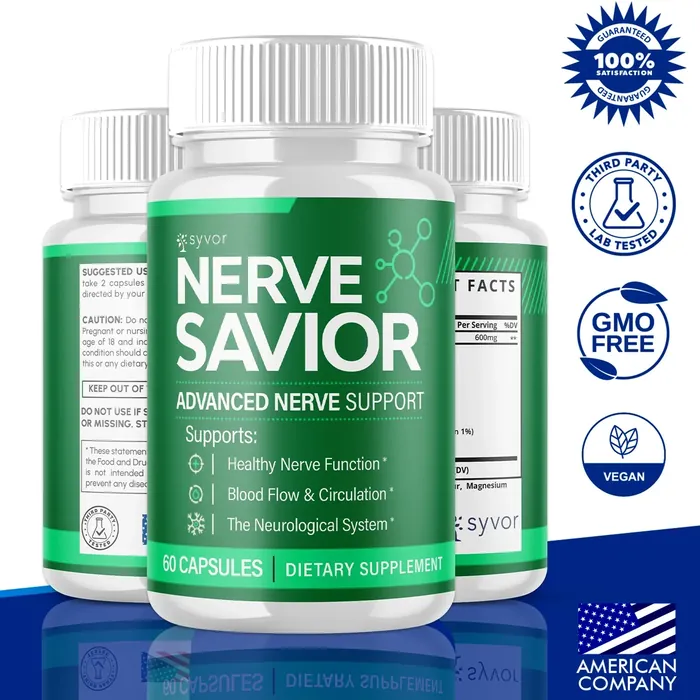
Results timeline
No trial means no proven timeline. What to track for 30 days, and when to stop early.
Read more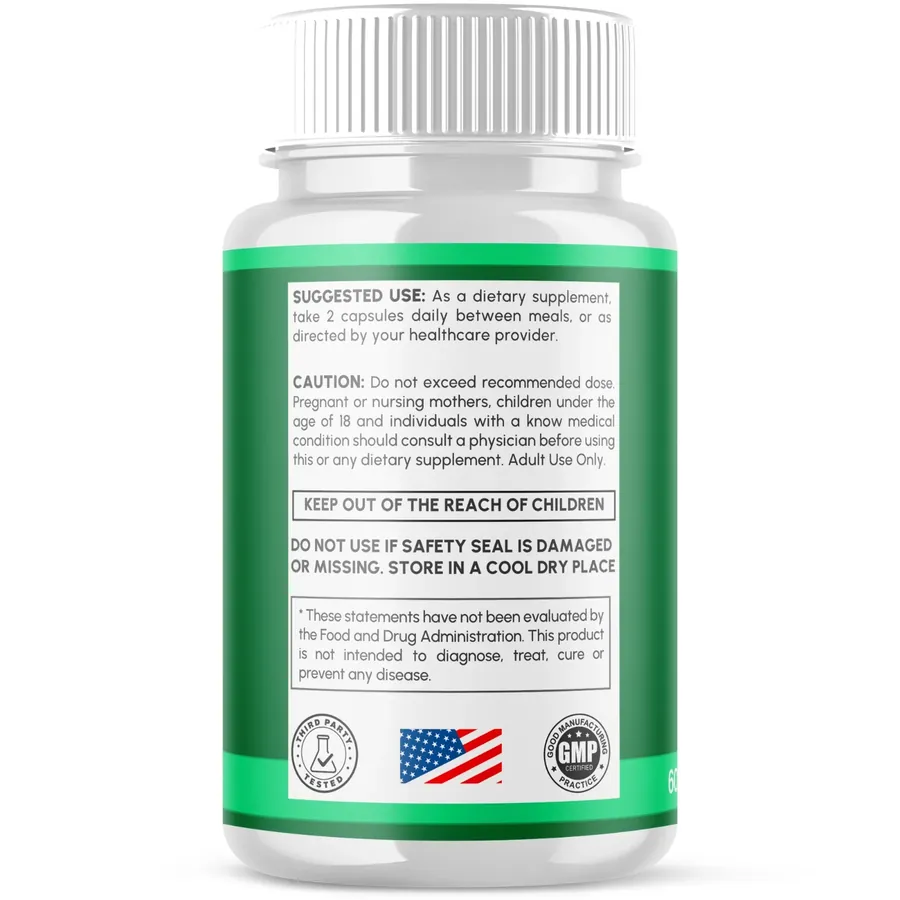
Side effects
Side effects and drug interactions for each Nerve Savior ingredient, plus who should skip it and when to call a doctor.
Read moreUSA Authorized Nerve Savior Retailer
Ready to try Nerve Savior?
Pick how long you want to try it. Two capsules a day, and one bottle lasts 30 days.
- Secure checkout
- 30-day return window
- Ships from the U.S. with tracking